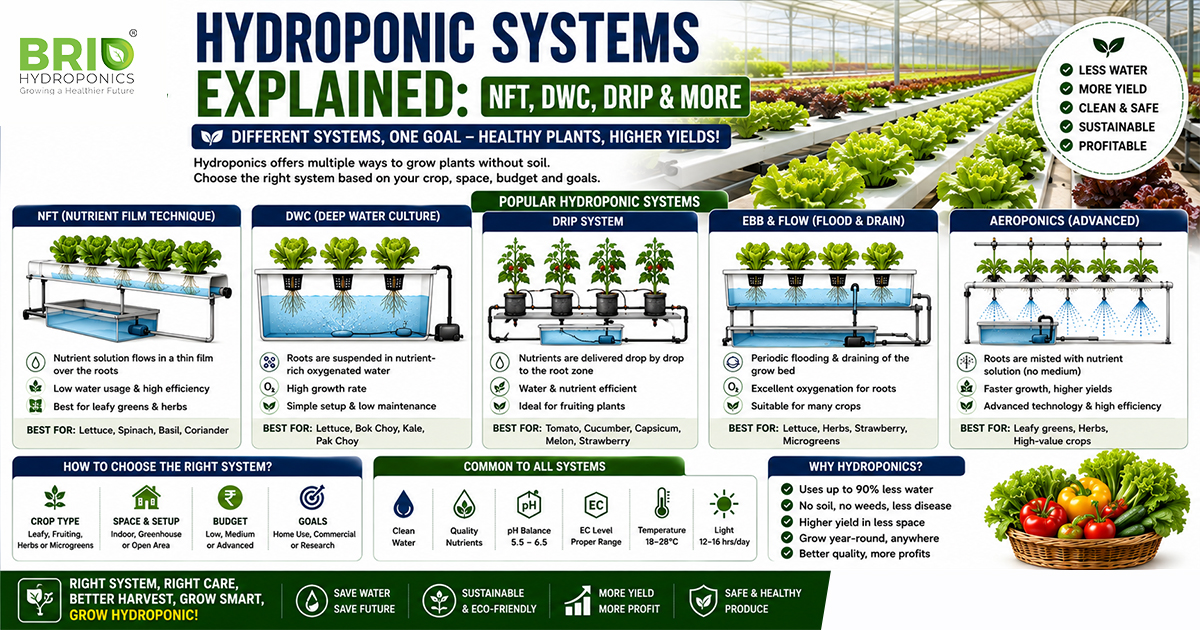
One of the first questions every aspiring hydroponic grower asks is: which system should I use? The answer depends on your crop, space, budget, and experience level. There are several types of hydroponic systems available today, each with its own strengths and best-use cases.
In this blog, we break down all the major hydroponic systems in plain, easy-to-understand language so you can make an informed choice before investing. Whether you are a beginner or a seasoned farmer exploring modern agriculture, this guide covers everything you need to know.
Why the Right System Matters
Choosing the wrong hydroponic system for your crop leads to poor yields, water wastage, and unnecessary maintenance. The right system, on the other hand, maximises plant growth, reduces labour, and makes your farm far more efficient. Understanding what each system does and how it works is the most important first step in your hydroponic journey.
NFT Hydroponics System (Nutrient Film Technique)
The NFT hydroponics system is one of the most widely used systems in the world, especially for leafy crops and herbs. In NFT, a thin continuous film of nutrient solution flows through sloped channels or pipes. Plant roots hang in these channels and absorb nutrients as the solution passes over them. The solution drains back into a reservoir and is recirculated.
How NFT Works
- A pump pushes nutrient solution from the reservoir up to the higher end of growing channels
- Solution flows as a thin film down the sloped channel over plant roots
- Excess solution drains back into the reservoir for recirculation
- Roots are partially in the solution and partially exposed to air, getting both nutrients and oxygen
Best Crops for NFT
Lettuce, spinach, kale, herbs like basil and mint, and other leafy greens. Not ideal for heavy fruiting crops like tomatoes because their large root mass can block the channels.
Pros and Cons of NFT
- Pro: Water and nutrient efficient, roots get good oxygenation, easy to inspect and clean
- Con: Pump failure stops nutrient flow and can harm plants quickly; not ideal for large-root crops
DWC Hydroponics System (Deep Water Culture)
The DWC hydroponics system is one of the simplest and most beginner-friendly systems available. Plants are placed in net pots that sit above a reservoir filled with aerated nutrient solution. The roots hang directly into the water and are always submerged.
How DWC Works
- A large reservoir is filled with nutrient solution
- An air pump with air stones continuously oxygenates the water
- Plants sit in net pots in the lid of the reservoir with roots hanging into the solution
- Nutrients and oxygen are always available to roots at the same time
Best Crops for DWC
Lettuce, herbs, cannabis (where legal and regulated), and some fruiting crops like tomatoes in larger setups.
Pros and Cons of DWC
- Pro: Very low cost to set up, fast growth rates, easy for beginners, low maintenance
- Con: Root rot risk if aeration fails; water temperature management is critical in hot Indian summers
Drip Hydroponics System
The drip hydroponics system is the most widely used system for large-scale commercial farming, especially for fruiting crops. A pump delivers nutrient solution through small drip emitters directly to the base of each plant. The system can be recovery (drains back to reservoir) or non-recovery (drains away).
Best Crops for Drip Hydroponics
Tomatoes, cucumbers, capsicum, melons, and any large fruiting crop. This is the dominant system in commercial hydroponic systems in India for high-value vegetable production inside polyhouses.
Pros and Cons of Drip Systems
- Pro: Highly scalable, works well with grow media like cocopeat, suits fruiting crops perfectly
- Con: Drip emitters can clog; requires regular maintenance and monitoring for best results
Wick System
The wick system is the most basic form of hydroponics. Absorbent wicks draw nutrient solution from a reservoir up into the growing media by capillary action. There are no pumps or moving parts. It is passive and silent.
Best for: Small herbs, microgreens, and home gardening. Not suitable for large plants or commercial production because the wicking rate is too slow for high-demand crops.
Ebb and Flow (Flood and Drain) System
In an ebb and flow system, the growing tray is periodically flooded with nutrient solution and then allowed to drain back completely into the reservoir. This happens on a timer, usually several times a day.
Best for: Herbs, lettuce, and crops grown in grow media like hydroton or cocopeat. Popular in research and hobbyist setups.
Aeroponics System
Aeroponics is the most advanced form of hydroponics. Plant roots are suspended in the air inside a sealed chamber. High-pressure mist nozzles spray nutrient solution directly onto the roots at regular intervals. Roots are never submerged.
Best for: High-value crops like ginseng, potato seed tubers, and premium herbs. Also used in NASA-style research and vertical farming. High cost and technical complexity make it unsuitable for most beginners.
Difference Between NFT and DWC Hydroponics
The difference between NFT and DWC hydroponics is a common question for beginners. Here is a quick comparison:
|
Feature |
NFT System |
DWC System |
|
Root environment |
Thin flowing film of solution |
Fully submerged in solution |
|
Oxygenation |
Roots partially in air |
Air pump oxygenates water |
|
Setup cost |
Moderate |
Low |
|
Best crops |
Leafy greens, lettuce, herbs |
Lettuce, herbs, small fruiting |
|
Pump failure risk |
High - roots dry out fast |
Lower - reservoir holds water |
|
Scalability |
High - easy to expand channels |
Moderate |
Which Hydroponic System is Best for Beginners?
If you are asking which hydroponic system is best for beginners, the answer is DWC for very small setups and NFT for anyone who wants to grow commercially from the start.
- DWC: Easiest to build yourself at home. Low investment. Great for learning the basics of hydroponics
- NFT: Best for commercial beginners who want to grow lettuce or herbs and sell to local markets quickly
- Drip: Best for those who want to grow fruiting crops like tomatoes and capsicum at a commercial scale
Hydroponic System Setup Guide: Key Steps Before You Start
Regardless of which system you choose, follow these steps before setting up your hydroponic system setup:
- Define your crop and target market before selecting the system
- Calculate the space available and plan your plant density
- Source quality growing inputs: nutrient solutions, grow media, seeds
- Install your protected structure (polyhouse or shade net) first if farming commercially
- Run the system empty with plain water for 2 to 3 days to check for leaks and pump performance
- Start with a small pilot batch before scaling to full capacity
Commercial Hydroponic Systems in India: What Works Best
In India, the most commercially successful commercial hydroponic systems in India are NFT for leafy greens and drip cocopeat systems for fruiting vegetables. These two together account for the majority of productive hydroponic farms operating at commercial scale across the country.
Vertical NFT towers are gaining popularity in urban rooftop farms and restaurant supply chains, while drip systems dominate polyhouse production of tomatoes, capsicum, and cucumbers.
Choose the Right System and Start Your Farm Today
Understanding types of hydroponic systems is the foundation of building a successful soilless farm. Whether you start with a small DWC setup at home or a full commercial NFT system in a polyhouse, the key is to match your system to your crop and your market.
Contact our team today for a personalised system recommendation and complete setup support. We design, supply, install, and train farmers across India in all major hydroponic systems.
The right system. The right crop. The right market. That is the formula for hydroponic success.
Frequently Asked Questions (FAQs)
Q1. What is the best hydroponic system for beginners in India?
DWC is the easiest system for absolute beginners because of its simplicity and low cost. NFT is recommended for beginners who want to start a commercial operation, especially for lettuce and leafy greens.
Q2. What is the difference between NFT and DWC in hydroponics?
In NFT, a thin film of nutrient solution flows continuously over the roots. In DWC, roots are fully submerged in an aerated nutrient reservoir. NFT is better suited for commercial leafy green production while DWC works well for small-scale setups.
Q3. Which system is used for commercial tomato farming in hydroponics?
The drip system with cocopeat growing bags is the most common method used for commercial tomato, capsicum, and cucumber production in India. It is efficient, scalable, and easy to automate.
Q4. Is aeroponics better than NFT?
Aeroponics can produce faster growth due to excellent root oxygenation, but it is far more expensive and technically complex. NFT is more practical, affordable, and proven for commercial production in India. Aeroponics is best suited for high-tech research farms.
Q5. How do I decide which hydroponic system is right for my farm?
Start by deciding your target crop and market. Leafy greens and herbs work best in NFT or DWC. Fruiting crops need drip systems. Budget, available space, and technical knowledge also influence the choice. A free consultation with a hydroponic expert can help you make the right decision.
Q6. Can I run multiple hydroponic systems in one farm?
Yes, many commercial farms use a combination of systems. For example, NFT channels for lettuce and herbs alongside drip cocopeat systems for tomatoes and cucumbers. Diversifying your crop and system mix reduces risk and ensures consistent year-round income.
Q7. What is the most water-efficient hydroponic system?
NFT is considered the most water-efficient system because it uses a thin film of solution that is constantly recirculated. Aeroponics is also very water-efficient but is far more expensive to set up. All hydroponic systems use significantly less water than open-field farming.